2026 How to Choose the Best Commuter Ebikes for Your Daily Ride?
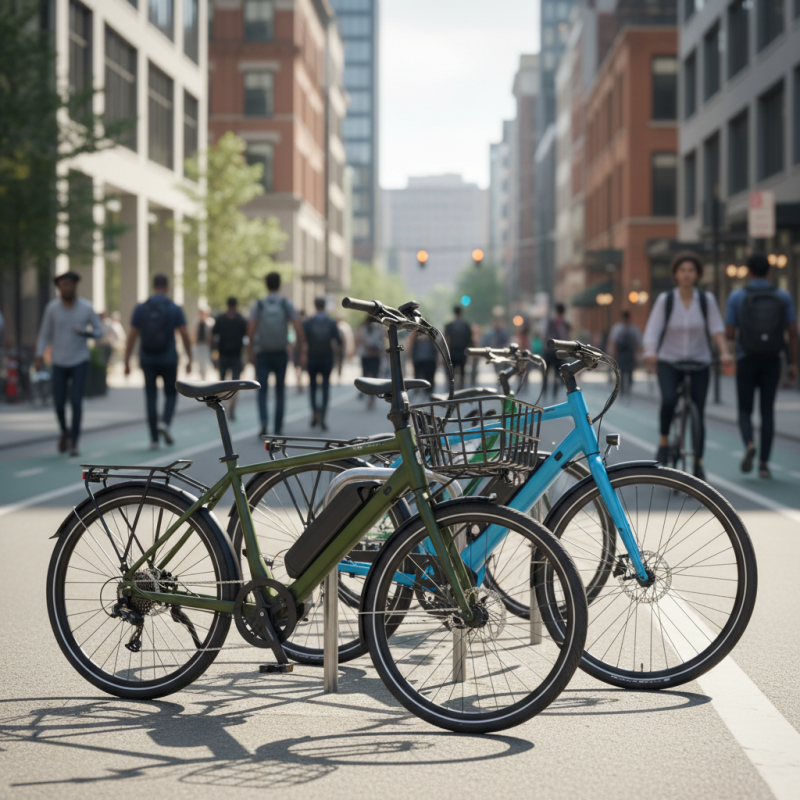
Choosing the right commuter ebike can significantly enhance your daily travels. Renowned expert in electric mobility, Dr. Emily Carter, once stated, “The perfect commuter ebike aligns with your lifestyle and needs.” Her insight emphasizes the importance of personalization in selecting these vehicles.
Commuter ebikes come in various designs, features, and price ranges. Factors such as battery life, weight, and affordability play crucial roles. For instance, a lightweight model may ease transport, while a longer battery life offers extended rides without hassle.
With many options available, the decision-making process can feel overwhelming. You may find yourself questioning which features truly matter for your commute. Each rider's needs differ, so reflecting on your daily routes and riding comfort is essential. Consider how the right commuter ebike can make your everyday travel smoother and more efficient.
Factors to Consider When Selecting the Right Commuter Ebike for 2026
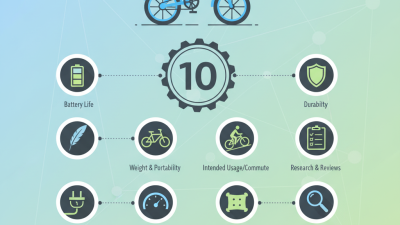
When choosing the best commuter ebike for 2026, several key factors come into play.
Battery life tops the list. Most commuters travel an average of 10-15 miles daily.
A reliable battery should support this distance comfortably while providing a quick recharge option.
According to industry reports, the ideal battery range is around 400-600 watt-hours for daily commutes.
Weight is another critical factor. A lightweight ebike makes it easier to navigate city streets and store in tight spaces.
Commuters should look for models under 50 pounds. Remember that a heavy bike can become cumbersome during climbs or in crowded areas.
Test rides can help assess whether the bike feels manageable.
Tip: Consider the bike’s integrated features.
Built-in lights and racks can enhance your commuting experience. Many models now offer smart functionalities, like GPS tracking.
Investing in comfort—good saddle and adjustable handlebars—can make daily rides enjoyable.
Keep in mind that preferences vary widely. What feels right for one person may not work for another.
Testing multiple bikes can help refine your choice.
Understanding Motor Power: How Wattage Affects Performance and Commuting
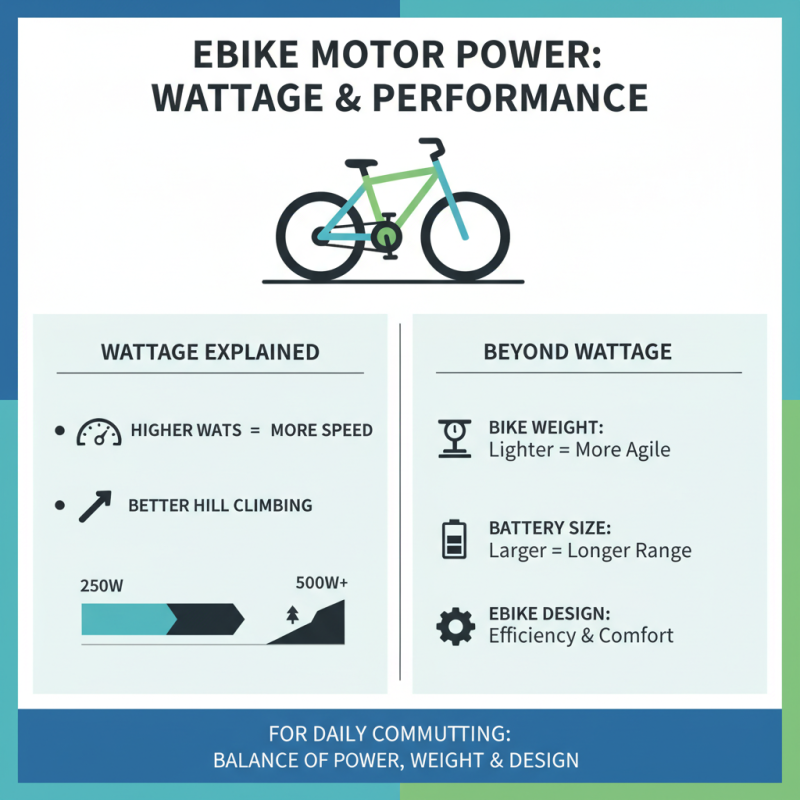
When choosing a commuter ebike, understanding motor power is key. Wattage directly influences performance, especially for daily rides. A higher wattage can mean more speed and better hill climbing. Yet, power doesn’t solely define a bike's efficiency. Weight, battery size, and design are also crucial.
Tips: Look for ebikes with at least 250 watts for comfortable commuting. This power level aids performance without overwhelming the user. It's enough for city streets and moderate inclines. Higher wattages, like 500 or more, deliver more thrill but can drain batteries faster. This trade-off may require frequent recharges.
Wattage is not everything. Some bikes have lower power but clever designs. These may handle urban challenges effectively. An effective commuter ebike is a balance between power and practicality. Test rides can reveal how a bike feels on different terrains. This practice helps identify what truly suits your needs for daily commutes.
Battery Capacity and Range: Key Metrics for Daily Commuter Ebikes
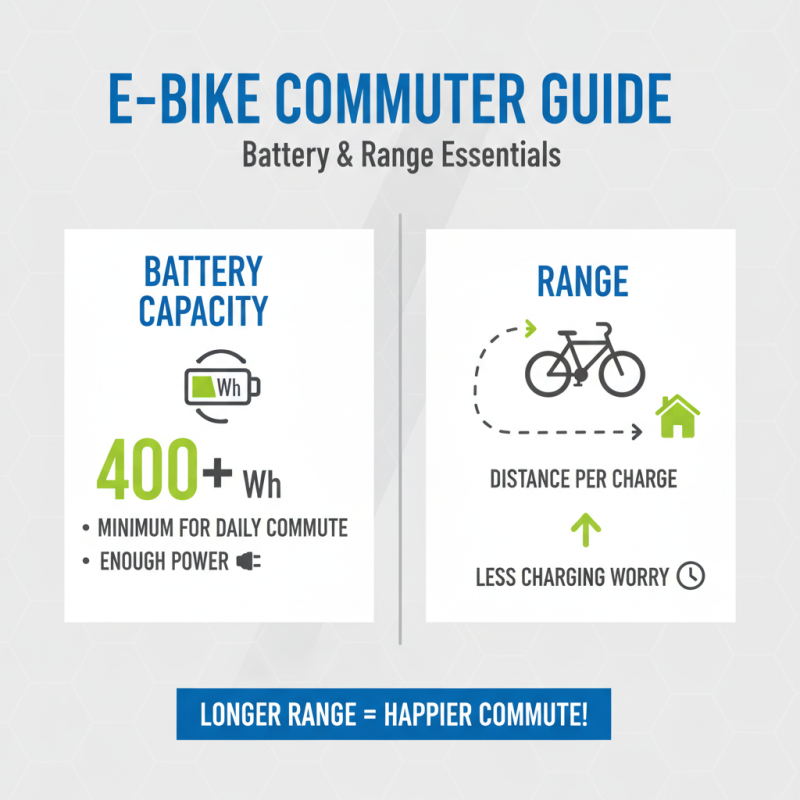
When selecting a commuter e-bike, battery capacity and range are crucial factors. A battery's capacity, measured in watt-hours (Wh), indicates how much energy it can store. For daily commutes, look for models with at least 400 Wh. This ensures you have sufficient power for your ride without constantly worrying about charging.
Consider your daily distance. If you travel ten miles round-trip, opt for a bike with a range of at least 25 miles. However, real-world conditions can reduce this range. Factors like terrain, rider weight, and assist level play significant roles. Test your chosen e-bike on varied routes to understand its limits.
**Tips:** Check if the e-bike has a removable battery for charging convenience. Look for features like regenerative braking, which can extend the range. Think about how you will charge your bike after your ride. A reliable charging routine can prevent range anxiety.
Evaluating Comfort and Ergonomics in Commuter Ebike Design
When selecting a commuter e-bike, comfort and ergonomics play a vital role. An ideal bike should fit the rider well. Check the frame geometry to ensure it suits your height and riding style. A relaxed riding position can reduce strain on your back and neck.
Saddle comfort is critical for longer rides. Look for a well-padded seat or an adjustable saddle to find your perfect fit. Grips and handlebars also matter. They should feel comfortable in your hands, aiding control and reducing fatigue. Pay attention to materials and shapes.
Don’t overlook pedal placement. Proper alignment can make pedaling more efficient and enjoyable. Test rides can reveal issues overlooked during initial assessments. Consider adjustments for feel and posture. It’s essential to reflect on your preferences. Is your current ride comfortable enough? If not, what changes can you make?
Evaluating Comfort and Ergonomics in Commuter Ebike Design
Analyzing Cost vs. Features: Finding the Best Value in Commuter Ebikes
When considering the best commuter ebikes, it's vital to analyze cost vs. features carefully. Many options exist, but not all deliver value. Focus on essential features like battery life, weight, and range. A lightweight bike can make a significant difference in daily use, especially when dealing with uphill rides or longer distances.
Researching battery specifications is crucial. Cheaper bikes may have lower capacity batteries. This means less range, which could limit your commute. Factor in local terrain as well. If your route includes steep hills, prioritize bikes with powerful motors despite potentially higher costs.
Another area to evaluate is the build quality of the ebike. Some lower-cost models might compromise on frame material and reliability. A well-constructed bike can save you future maintenance costs and provide a safer ride. Look for user reviews and ratings on durability. Often, conscientious consumers share insights that can help you avoid pitfalls. Balancing these elements can lead to a thoughtful purchase that enhances your daily commuting experience.
2026 How to Choose the Best Commuter Ebikes for Your Daily Ride? - Analyzing Cost vs. Features: Finding the Best Value in Commuter Ebikes
| Model |
Price ($) |
Range (miles) |
Motor Power (W) |
Weight (lbs) |
Features |
| Model A |
1,200 |
40 |
500 |
45 |
LCD Display, Adjustable Seat, Front Suspension |
| Model B |
1,500 |
60 |
750 |
50 |
Smart Lock, Bluetooth, LED Lights |
| Model C |
1,000 |
30 |
350 |
40 |
Foldable, Lightweight, Rechargeable Battery |
| Model D |
1,800 |
50 |
1000 |
55 |
Integrated GPS, Hydraulic Brakes, Puncture-resistant Tires |