2026 How to Choose the Best City Ebike for Your Urban Commute?
As urban areas grow, commuting modes evolve. The rise of the City Ebike offers a sustainable,
convenient, and efficient alternative for city dwellers. According to a recent study by the International Council on Clean Transportation, e-bikes can reduce greenhouse gas emissions by up to 50% compared to traditional car commuting. These statistics underline the importance of making informed choices when selecting the right ebike for city riding.
Expert James McClung, a well-respected figure in the urban mobility sector, states, “Choosing the right City Ebike involves understanding your personal needs and the unique challenges of your urban environment.” This statement emphasizes the individuality of each commuter's experience. With various models and technologies available, the decision-making process can be daunting.
However, potential buyers should also reflect on their specific commuting habits and local regulations. While features like battery life and weight are critical, it’s equally vital to consider terrain and parking. A well-rounded decision can enhance the commuting experience, making it seamless yet still reflective of one's lifestyle.

Understanding Your Urban Commuting Needs for an Ebike
Choosing the right city ebike depends on your urban commuting needs. Start by assessing the distance of your daily commute. According to the U.S. Census Bureau, the average American commute is about 26 minutes, which translates to roughly 10 miles. Active commuters can find ebikes with a range that accommodates this distance, ideally around 30-50 miles on a single charge.
Consider your terrain as well. If you navigate hills, look for models with higher torque motors. Reports suggest that electric bikes with at least 500W of power perform well in hilly areas. Remember to evaluate comfort features, too. A comfortable seat and ergonomic handlebars can make a significant difference.
Research shows that riders often abandon bikes due to discomfort during prolonged use.
Reflect on your riding habits as well. Do you prefer leisurely rides or faster commutes? If speed is your priority, select a bike with adjustable pedal assist levels. However, be aware that speed often compromises battery life. Some reports indicate that riding at a high speed can decrease the overall range by up to 20%. Each ride offers an opportunity to better understand your needs and preferences, leading you closer to the perfect urban commuting solution.
Key Features to Consider When Choosing a City Ebike
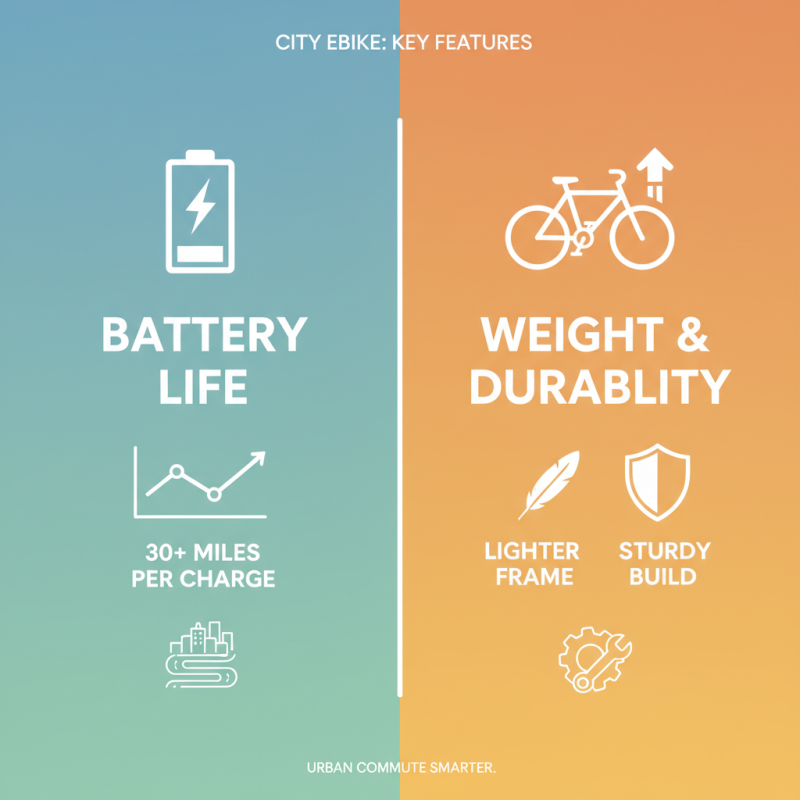
When selecting a city ebike for your urban commute, several key features deserve your attention. Battery life is crucial. A longer range ensures you can travel further without frequent recharges. Consider models with at least 30 miles per charge. This allows for flexibility during your ride. Weight also matters. A lighter ebike is easier to maneuver, especially in crowded areas. However, balance this with durability. You want a sturdy frame that can handle daily wear and tear.
Additionally, take into account the bike's comfort features. A comfortable saddle and ergonomic grips can improve your ride, especially on longer commutes. Suspension systems can absorb bumps in the road, providing a smoother experience. It's wise to test ride before buying. Each person's preferences differ. Don't shy away from experimenting with different styles until you find what suits you best.
Lastly, safety features can’t be overlooked. Good lighting, reflective surfaces, and reliable brakes are essential for city riding. Check the local regulations regarding ebike specifications. This can help you avoid future issues. Pay attention to these details to ensure your city commuting experience is both enjoyable and safe.
Comparing Different Types of City Ebikes
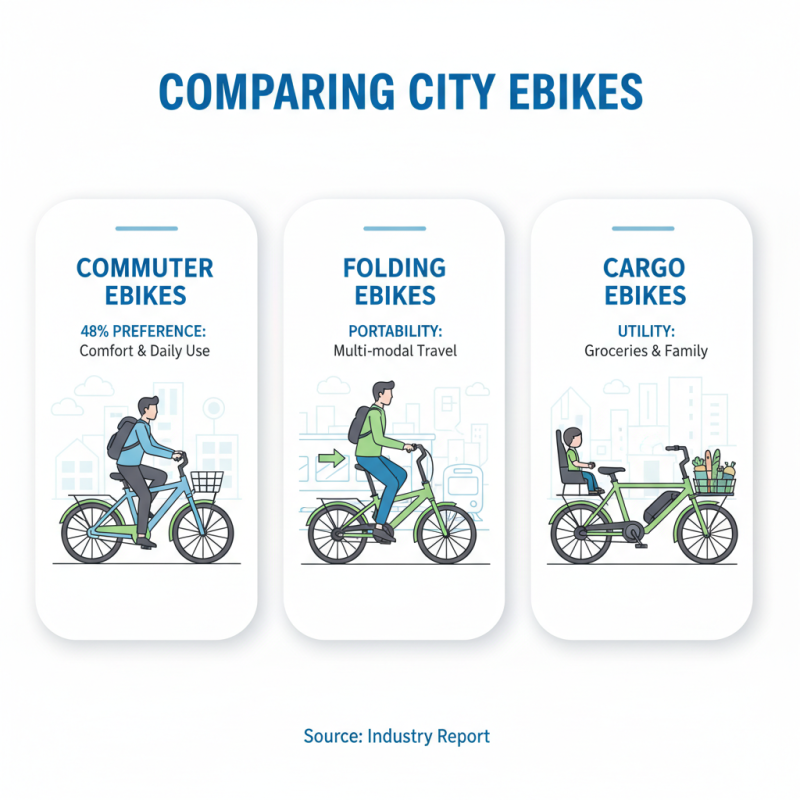
When selecting a city ebike for urban commuting, it's crucial to consider various types available in the market. Electric city bikes generally fall into a few categories, including commuter ebikes, folding ebikes, and cargo ebikes. Each type serves a unique purpose. According to a recent industry report, about 48% of commuters prefer commuting bikes that offer comfort and practicality for daily use.
Commuter ebikes usually feature a relaxed geometry, making them ideal for long-distance travel. They might have larger tires and a comfortable seat for smooth rides over city roads. In contrast, folding ebikes, while compact, can pose challenges in stability at higher speeds. They are great for space-saving but might not provide the same power as commuter models. Cargo ebikes are perfect for those who need to transport goods. However, they may be bulkier, thus navigating crowded streets can become cumbersome, representing a potential drawback.
With advancements in battery technology, range has improved, reaching up to 70 miles on a single charge in some models. Yet, it's essential to reflect on factors like charging time, weight, and maintenance needs. Regularly, users report that heavier models can be a hassle when climbing steep hills or maneuvering tight corners. Balancing these considerations is key to finding the right ebike for urban commuting needs.
Assessing the Battery Life and Range of Ebikes
When choosing an ebike for your city commute, battery life and range are critical factors. The majority of urban riders seek a bike that can cover at least 20-40 miles on a single charge. According to a recent report by the National Renewable Energy Laboratory, most commuter ebikes operate efficiently within this range. However, many lower-cost models may only achieve 15-20 miles, limiting their utility for daily commutes.
Battery performance can also vary due to factors such as riding style and terrain. For instance, riding uphill or at higher speeds consumes more energy. Riders should consider a mid-range battery capacity of 400-600 watt-hours for better flexibility. A study by the European Cyclists' Federation found that only 30% of riders experienced battery issues if their battery capacity was well-matched to their commuting habits.
Charging time matters too. While many batteries can recharge in 4 to 6 hours, fast-charging options are increasingly available, reducing downtime. Still, it's worth noting that frequent fast charging can degrade battery life over time, leading to potential inconvenience. Evaluating your typical routes and distance is essential. Assessing both the battery's stated range and real-life performance can illuminate key trade-offs in the biking experience.
Battery Life and Range Comparison of City Ebikes
Evaluating Price Versus Performance in Urban Ebikes
When choosing an urban eBike, price and performance are crucial factors. A lower price tag might be tempting, but it often compromises quality. Cheaper models may have less powerful motors and shorter battery life. This can lead to a disappointing commute.
Performance is key for urban travel. A good eBike should offer a balance of speed and efficiency. Look for models with at least a 250W motor for city commuting. This power can help tackle hills and busy streets. Additionally, the battery should provide a range of at least 30 miles.
It's important to consider the weight of the eBike. Heavier bikes may be harder to maneuver. Lightweight models are often more responsive. Reflecting on your actual needs can guide your decision. Are you commuting daily or occasionally? Evaluate your routes and habits to make the best choice. Consider what features enhance your experience and what can be sacrificed.