2026 How to Choose the Best Urban Ebike for Your Daily Commute?
Choosing the right Urban Ebike for your daily commute is vital in today’s fast-paced world. With more people seeking eco-friendly transportation, the Urban Ebike market has seen significant growth. A recent report from the Bureau of Transportation Statistics revealed that commuting by bike can reduce carbon emissions by up to 50%. This data highlights the importance of selecting the right ebike for reducing our environmental footprint.
However, selecting an Urban Ebike requires careful consideration. Factors like battery life, weight, and comfort can affect your experience. Many people, eager to embrace this trend, often overlook these essential details. Nearly 30% of urban commuters report discomfort during lengthy rides, a reflection of inadequate bike choices. This statistic suggests a need for a deeper understanding of personal preferences.
Riding an Urban Ebike can be transformative. It not only promotes physical health but also eases city traffic. Yet, potential buyers must assess their individual needs first. Consider your route, riding habits, and local climate. Reflecting on these aspects will lead to a more satisfying riding experience. Ultimately, the right Urban Ebike can make a meaningful difference in urban living.

Understanding Urban Ebikes: Key Features for Daily Commuting
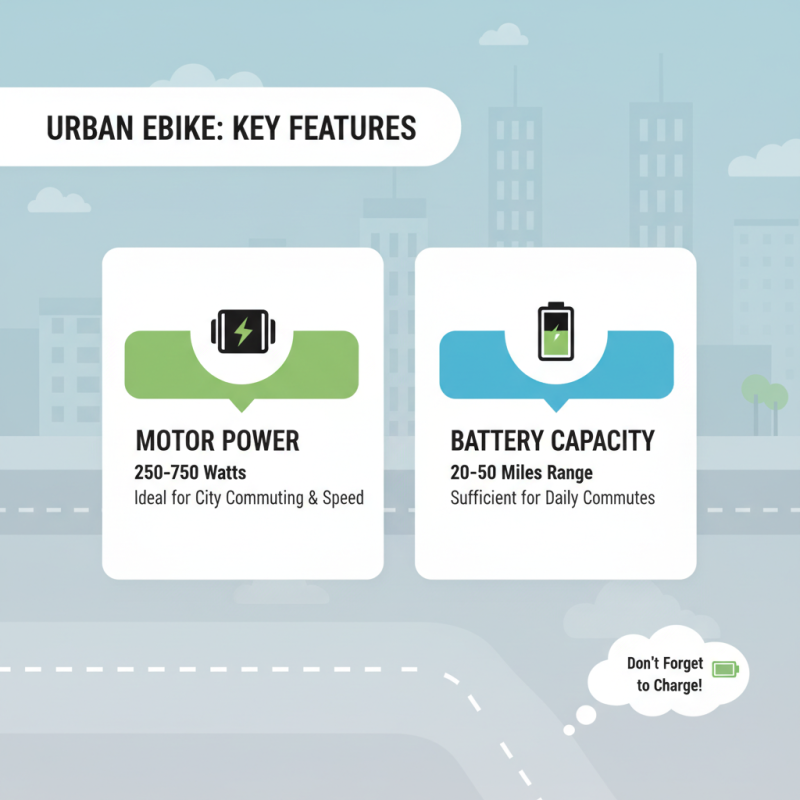
When choosing an urban ebike, understanding key features is vital. First, consider the motor power. A motor with 250 to 750 watts is ideal for city commuting. This gives you speed without exhausting yourself. Battery capacity is equally important. A range of 20 to 50 miles is usually sufficient for daily commutes. However, battery life can fluctuate based on terrain and usage. This can be frustrating if you forget to charge it.
Next, look at the bike's weight. Lighter models are easier to maneuver but may sacrifice durability. A heavier bike may offer sturdiness but make it tough when carrying upstairs. Suspension is another crucial element. Good suspension absorbs bumps but can add weight. Test the bike to see how it feels on different surfaces.
Lastly, think about portability. Some ebikes fold, making storage convenient. However, folding bikes can compromise stability. Examine the frame size too. A wrong size can cause discomfort during long rides. Remember to prioritize features that suit your daily routine. Ultimately, your commuting style will dictate your ideal ebike. Reflect on your options carefully.
Evaluating Battery Life and Range: Industry Standards for Commuter Ebikes
When evaluating an urban eBike, battery life and range are crucial. Many commuters underestimate how these factors impact daily rides. A reliable eBike needs a battery that lasts for a minimum of 30 miles. If your commute is longer, you may face complications. Look for batteries rated for at least 500 charge cycles. This ensures longevity and reliability over time.
Range varies widely between models. Some eBikes struggle to maintain momentum on inclines or in strong winds. If you live in a hilly area, consider a model with a robust motor and a reliable battery. Environmental factors also play a role; colder temperatures can reduce battery efficiency.
Pay attention to charging times as well. A quick charge can be a game changer for busy schedules. If your eBike takes too long to charge, it can lead to frustrations. Also, check the weight of the bike. Heavier models may not be ideal for maneuvering through busy city streets. Balancing range, performance, and charging time is key to finding the right commuter eBike.
2026 How to Choose the Best Urban Ebike for Your Daily Commute? - Evaluating Battery Life and Range
| Model |
Battery Type |
Battery Capacity (Wh) |
Range (Miles) |
Charging Time (Hours) |
Weight (lbs) |
| Urban Commuter 1 |
Lithium-ion |
500 |
40 |
4 |
50 |
| City Rider 2 |
Lithium-ion |
600 |
50 |
5 |
48 |
| Eco Commuter 3 |
Lithium-polymer |
450 |
35 |
3 |
52 |
| Smart Urban 4 |
Lithium-ion |
700 |
60 |
6 |
45 |
| City Explorer 5 |
Lithium-ion |
550 |
45 |
4.5 |
49 |
Assessing Weight and Portability: Ideal Specifications for Urban Use
When selecting an urban ebike, weight and portability are crucial factors. Industry reports indicate that the average urban commuter bike weighs between 35 to 50 pounds. However, a bike under 30 pounds is ideal for city dwellers. Lighter bikes ensure ease of maneuverability in traffic and when navigating curbs. Portability is also key for those using public transport. A foldable design can be a game changer. Bikes that fold into compact sizes can easily fit under a desk or in a small apartment.
Battery size plays an essential role in an ebike's weight. Typically, a standard urban ebike has a battery weight of around 6-10 pounds. A smaller battery might reduce the overall weight but can limit range. Finding the right balance between weight, battery capacity, and performance requires careful thought. For instance, models that boast lightweight designs may lack features essential for comfort or durability. This trade-off is often overlooked by first-time buyers.
In the end, choosing an ebike means prioritizing what matters most. Some urban riders might prefer a hefty bike for stability. Others might sacrifice battery life for a lighter frame. It’s essential to reflect on personal commuting habits and requirements. Consider your own balance of weight, portability, and functionality.
Examining Safety Features: Essential Components for City Riding
When choosing an urban ebike, safety features are essential. Priority should be on
brakes, lights, and reflective elements. A reliable braking system is crucial for quick stops. Disc brakes or hydraulic
brakes often provide better response in city traffic. It's also wise to ensure that your bike has quality tires. Good traction helps in handling wet or uneven surfaces.
Lights play a vital role in visibility. Front lights illuminate paths ahead, while rear lights alert others. Consider bikes with built-in lights for convenience.
Reflective elements on the bike and your gear can enhance safety, especially at night. Wearing a helmet is also a must, yet many overlook
its importance.
Remember, safety is not just about features. Regular maintenance is key. Check brakes and lights frequently. Neglecting this can lead to accidents.
City riding can be unpredictable. Being prepared means being safe. A well-equipped bike aids in navigating the urban jungle effectively.
Cost Considerations: Analyzing the Price Range of Quality Urban Ebikes
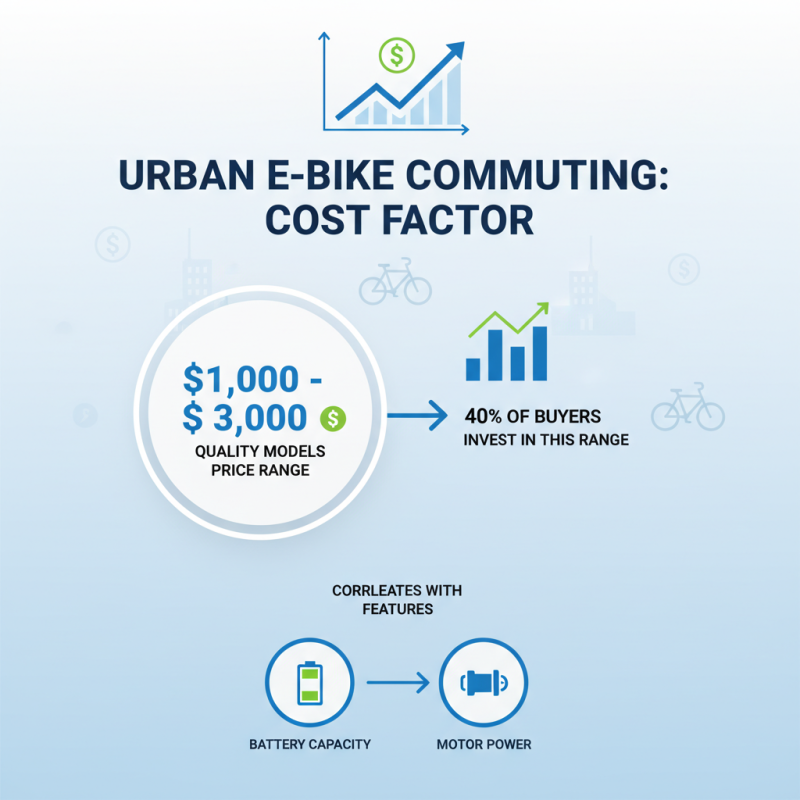
When considering an urban e-bike for commuting, cost is a crucial factor. The price range for quality models typically falls between $1,000 and $3,000. According to a recent industry survey, about 40% of urban e-bike buyers invest in this range. This price often correlates with features like battery capacity and motor power.
Battery life is essential for daily use. A good e-bike should offer 30 to 60 miles on a single charge. Models within the $1,500 to $2,500 range usually meet this standard. However, some buyers feel the higher price tags don’t always guarantee required performance. Maintenance costs can also add up, impacting the overall budget.
Moreover, consider long-term value. Cheaper models might cost less upfront but may require frequent repairs. A research report indicates that owners of low-cost e-bikes spend roughly 20% more on repairs in the first two years. So, while the initial cost is important, total ownership expenses deserve careful thought.