10 Lightweight Ebike Buying Tips for Global Buyers?
Choosing a Lightweight Ebike sounds simple until you lift one into a car trunk. A listed weight may exclude pedals, racks, or the battery. That small detail can change your daily experience.
Richard Peace, an experienced e-bike writer and cycling journalist, offers a useful perspective: “The best e-bike is the one that fits your life.” His point matters for global buyers. A compact model may suit apartment storage, while a slightly heavier bike may offer stronger range, comfort, and stability on rough streets.
This guide introduces 10 practical Lightweight Ebike buying tips for international shoppers. It considers frame materials, motor output, battery capacity, removable batteries, folding systems, tire width, riding posture, and after-sales support. Each factor affects real use. A 17-kilogram bike feels manageable on stairs. A 500Wh battery may reduce charging worries during long commutes. Yet more capacity usually adds weight.
Look beyond attractive product photos.
Specifications can be incomplete. Some brands measure weight differently, and advertised range often assumes light riders, flat roads, and gentle assistance. That is not everyday riding. Rain, hills, luggage, and cold weather can reduce performance.
A careful buyer should compare independent reviews, warranty terms, charger compatibility, replacement-part access, and local service options. Battery transport and charging requirements may also differ between regions. Check current local guidance before purchasing.
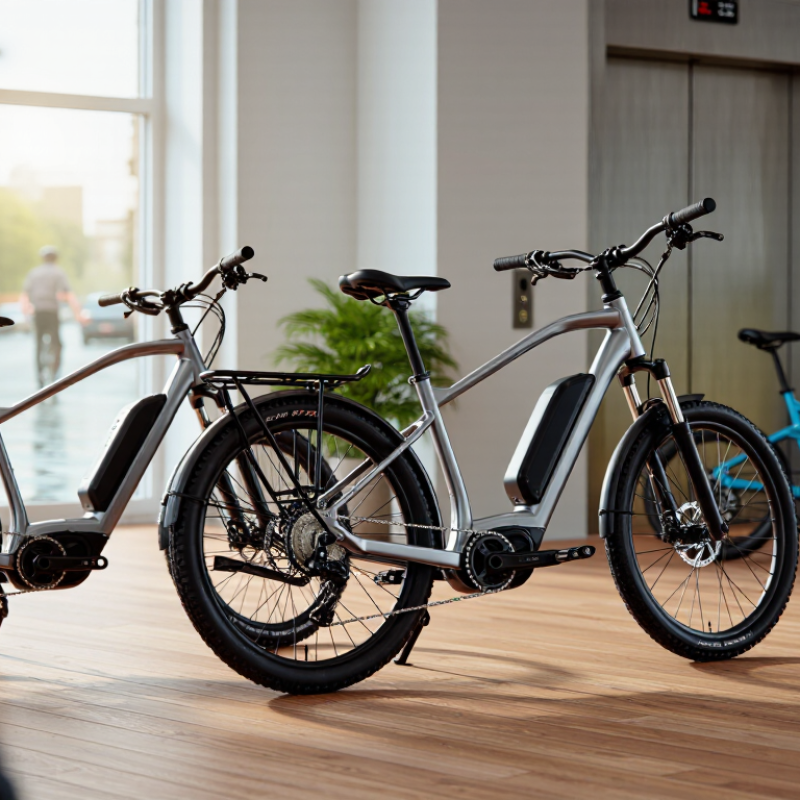
There is no perfect model. I once underestimated handlebar width when comparing folding bikes, and storage became frustrating. That mistake proves the value of measuring doorways, elevators, and storage spaces first.
Use these tips as a practical framework, not a rigid formula. The right Lightweight Ebike should feel dependable at home, on the road, and after several months of ownership.
Define What Makes an Ebike Lightweight
Define What Makes an Ebike Lightweight
“Lightweight” has no universal industry definition. In practical buying work, I treat an ebike under 20 kilograms as light, while under 15 kilograms feels genuinely portable. These numbers are useful, not absolute. A small folding model and a long-range commuter should not share the same weight expectation. The European standard EN 15194 focuses on assisted speed, motor output, and safety requirements, but it does not create a universal weight category. That gap often confuses global buyers.
Weight comes from specific parts. A 400–500 Wh battery can add several kilograms, while a larger frame, suspension fork, hydraulic brakes, and rear rack increase carrying weight quickly. The 2023 ZIV Bicycle Industry report found ebikes reached 53% of bicycle sales in Germany, showing how mainstream electric cycling has become. However, popular does not mean easy to lift. Test the bike beside stairs, not only on a showroom floor. Can you lift the front wheel? Can you place it inside a vehicle without twisting your back? Those moments reveal more than a specification sheet.
A lower weight may also reduce range, comfort, or durability. The International Energy Agency’s Global EV Outlook 2024 notes continuing improvements in battery energy density, but progress does not remove trade-offs. My own rule is imperfect: compare total weight, battery capacity, frame geometry, and carrying points together.
A 17-kilogram ebike with an awkward handle can feel heavier than a balanced 20-kilogram model. That is easy to miss.
Check Range, Charging Needs, and Portable Battery Options
10 Lightweight Ebike Buying Tips for Global Buyers
Check Range, Charging Needs, and Portable Battery Options
Range figures can look generous, but real riding is less predictable. The IEA’s Global EV Outlook 2024 reports strong global growth in electric two- and three-wheelers. However, its market data does not guarantee a specific ebike’s daily range. Test the bike on your actual route. Hills, wind, rider weight, tire pressure, and cargo can reduce distance noticeably. My first mistake was trusting a display estimate after a short, flat ride. It was optimistic.
Check battery capacity in watt-hours, calculated as volts multiplied by amp-hours. A 500 Wh battery may suit short urban trips, but frequent hills require more reserve. Measure your round-trip distance, then keep a practical buffer for weather and aging. The U.S. Department of Energy notes that temperature affects battery performance, especially in cold conditions. Small detail. Large consequence.
Charging access matters as much as range. A removable battery helps apartment users and travelers, but it adds carrying weight. A second approved battery can reduce charging anxiety, although it increases cost and storage responsibility. Charging time depends on battery size and charger output; a 500 Wh pack with a 100 W charger can need roughly five hours before losses. Check local voltage compatibility, charger certification, and transport rules before international travel. UN 38.3 testing is relevant for lithium battery transport, but requirements vary by carrier and destination. Avoid improvised adapters, damaged packs, and unattended charging. Portable power stations may work, yet their output, connectors, and safety limits must match the charging system.
10 Lightweight Ebike Buying Tips for Global Buyers: Range, Charging and Portable Battery Needs
Typical real-world range varies with battery capacity, riding conditions and assist level.
A 250 Wh battery commonly supports about 25–35 km in mixed riding, while a 500 Wh battery may support roughly 50–70 km. Cold weather, hills, rider weight, tire pressure and high assist levels can reduce range. For frequent charging away from home, choose a model with a removable battery and confirm its voltage, charger compatibility and local electrical standards.
Evaluate Fit, Folding Features, Brakes, and Riding Comfort
A lightweight ebike should fit your body before it fits your budget. Measure your inseam and compare it with the listed saddle range. Your knees should remain slightly bent at the lowest pedal position. The handlebar should not force your shoulders upward. Fit matters. I once assumed a compact frame would suit every rider. That shortcut was wrong. Smaller frames can feel twitchy, especially on uneven streets, so check wheel size and reach carefully.
Folding features deserve a hands-on inspection. The hinge should lock firmly without excessive play or sharp edges. Test it folded. Lift the bike using its intended grip, then check whether pedals or cables catch during movement. A folded ebike may fit a train compartment, but its shape can still feel awkward in a narrow apartment. Confirm folded dimensions, total weight, and whether the battery remains installed during carrying. These details matter more than attractive product photos.
Brakes and riding comfort need equal attention. Mechanical or hydraulic systems can both work well when correctly adjusted, but levers should feel progressive, not spongy. Squeeze both levers while walking the bike slowly. It should stop smoothly without sudden grabbing. For comfort, inspect saddle width, suspension design, tire volume, and handlebar height. A larger tire can soften rough pavement, although it may add rolling resistance. Comfort is personal. A short test ride may hide pressure points, so ride for at least twenty minutes and notice your wrists, hips, and lower back. If discomfort appears early, it usually worsens on longer journeys.
Verify Local Regulations, Warranty Support, and Total Cost
10 Lightweight Ebike Buying Tips for Global Buyers
A lightweight ebike is easy to carry, but international buying needs more than a low shipping weight. The IEA reported that electric two- and three-wheelers exceeded 60% of global electric vehicle sales in 2023. This growth does not create one worldwide rulebook. Check your destination’s limits for assisted speed, motor power, throttle use, lighting, helmets, and registration. Rules may differ between a city and its wider region. Ask the seller for a written specification sheet. Do not rely on a product page alone.
Tip: Calculate the landed cost before paying. Include the bike, freight, customs duty, VAT or sales tax, assembly, charger replacement, and local delivery. BloombergNEF reported an average lithium-ion battery pack price of 139 US dollars per kWh in 2023, but a small ebike replacement battery can cost much more at retail. That gap surprised me when comparing imported products. Battery format and connector availability matter. A cheap bike can become expensive after one failed battery.
Tip: Treat warranty support as a service plan, not a promise. Request the warranty period, exclusions, return address, repair process, and expected parts availability. The European Bicycle Industry and Market Profile has repeatedly shown strong ebike demand across Europe, yet service capacity remains uneven between countries. Check whether local technicians can diagnose the controller and battery. Keep invoices, serial numbers, and delivery photos. A warranty without nearby support may be technically valid, but practically weak.