Inquiry
Form loading...
China remains a central manufacturing base for the global Ebike Wheel supply chain. Its factories combine aluminum rim forming, CNC machining, spoke building, and hub-motor integration under one industrial roof. The China Bicycle Association reported strong electric bicycle production and sales activity in recent years. Meanwhile, Grand View Research estimates that the global electric bike market will continue expanding through 2030. These trends increase demand for lighter, stronger, and more traceable wheel systems.
However, scale does not automatically mean quality. An Ebike Wheel must handle motor torque, rider weight, road vibration, braking forces, and repeated impacts. The right supplier should provide fatigue testing, spoke-tension records, rim specifications, and consistent quality control. Wheel-building authority Sheldon Brown wrote, “The strength of a wheel depends primarily on the tension of the spokes.” His principle remains highly relevant to modern electric bicycles, especially when heavier batteries and hub motors raise structural demands.
This guide examines leading Chinese Ebike Wheel manufacturers through practical criteria. These include engineering capability, production capacity, certification experience, customization, warranty support, and export reliability. Company rankings can change. No list is permanently perfect. Some manufacturers publish limited test data, which deserves careful review. Buyers should also compare real samples, not only catalog photographs. A well-built wheel should feel precise in the workshop and stable on wet city streets. That difference often appears after thousands of kilometers, not during the first inspection.
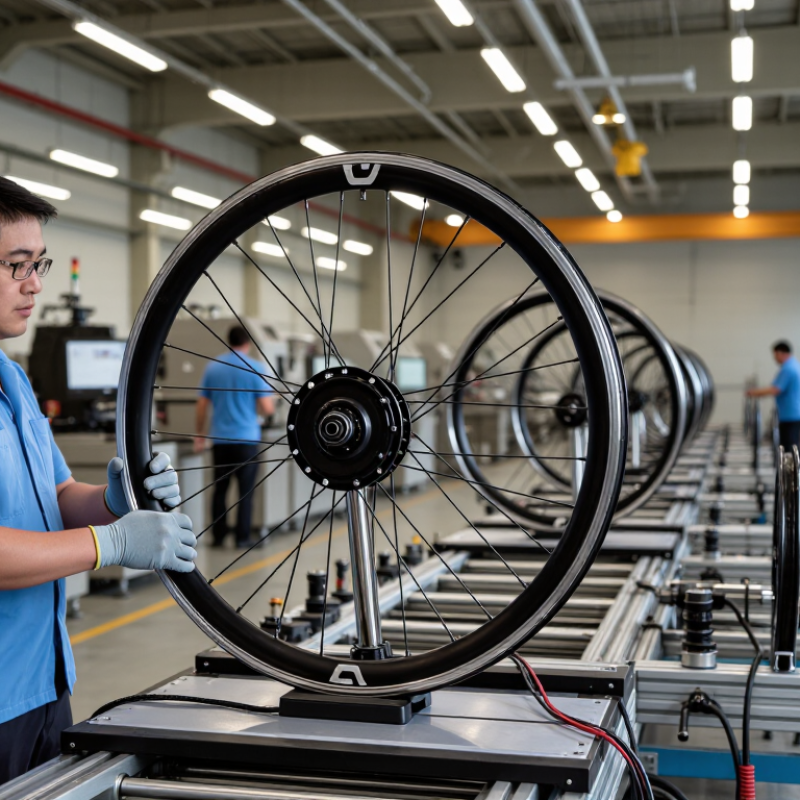
An e-bike wheel is more than a rim with a tire. It must carry the rider, frame, battery, and motor while handling repeated starts and stops. The 2023 Light Electric Vehicle Association market report estimated that about 1.1 million e-bikes were imported into the United States in 2022. That scale makes wheel durability a practical concern, not a minor specification.
The core assembly includes the rim, hub, spokes, nipples, tire, and inner tube or tubeless seal. The hub must match the motor location and axle system; rear hubs also need compatible gearing and braking interfaces. Spoke count and lacing affect how loads move into the rim. For example, a heavily loaded cargo bike may need a stronger rim and more robust spoke support than a light city model. More is not always better, though: excessive weight can make a wheel feel sluggish.
Standards matter. ISO 4210 sets safety requirements and test methods for bicycle components, including wheels. Buyers and manufacturers should still check actual wheel specifications, since a standard does not guarantee suitability for every e-bike. Look closely at rim width, tire clearance, axle dimensions, brake type, and the wheel’s stated load capacity. A small mismatch can mean poor handling or repeated spoke repairs. Even experienced teams sometimes overlook that detail.
| Wheel Component | Primary Function | Common Designs or Materials | E-Bike Considerations |
|---|---|---|---|
| Rim | Supports the tire and provides the outer structure of the wheel. | Usually made from aluminum alloy; available in different diameters, widths, and rim profiles. | Match the rim’s diameter and internal width to the tire and frame specifications. A wider tire generally requires a compatible rim width. |
| Hub | Connects the wheel to the bicycle and allows it to rotate around the axle. | Front and rear hubs vary by axle type, hub width, bearing design, and brake interface. | Check frame or fork spacing, axle dimensions, brake compatibility, and—for rear wheels—cassette or freewheel compatibility. |
| Hub Motor (when fitted) | Produces drive assistance from within the wheel hub. | Common types include geared and direct-drive motors, generally installed in the front or rear wheel. | Motor location affects wheel installation and handling. Confirm axle fit, cable routing, controller compatibility, and applicable electrical requirements. |
| Spokes | Connect the hub to the rim and distribute loads across the wheel. | Typically made from steel; straight-gauge and butted designs are used in different wheel builds. | Spoke count, length, lacing pattern, and tension must suit the hub and rim. Motorized wheels need a build appropriate to their loads and intended use. |
| Spoke Nipples | Secure the spokes at the rim and allow spoke tension to be adjusted. | Often made from brass or aluminum and selected to match the spoke thread and rim drilling. | Correct nipple length and material help ensure a suitable fit and allow wheel maintenance. |
| Tire | Provides traction, cushioning, and contact with the riding surface. | Available in different diameters, widths, tread patterns, and constructions; some tires are tubeless-compatible. | Use a tire size compatible with the rim, frame, and fork. Consider load rating, puncture protection, and the intended riding surface. |
| Inner Tube or Tubeless Setup | Holds air inside a tire; tubeless systems seal the tire to the rim without an inner tube. | Tube valve types and lengths vary. Tubeless setups require compatible rims, tires, valves, and sealant. | Match the tube size and valve to the wheel, or confirm that all parts of a tubeless system are compatible. |
| Rim Tape | Covers spoke holes or the rim bed to protect the tube or support a tubeless seal. | Available in different widths and materials for specific rim profiles and applications. | Choose tape that covers the rim bed correctly without obstructing the tire bead or valve opening. |
| Freehub or Freewheel | Provides the rear-wheel mechanism that engages the drivetrain while pedaling and allows coasting. | Rear hubs may use a freehub body with a cassette or a threaded freewheel assembly. | Confirm compatibility with the bicycle’s drivetrain, sprocket configuration, and rear hub before selecting a replacement wheel. |
| Brake Interface | Transfers braking force to the wheel. | Disc-brake hubs use a rotor mounting interface; some bicycles use rim brakes that contact the rim’s braking surface. | Match the wheel to the bicycle’s brake type and verify rotor mounting and clearance where applicable. |
| Axle and End Caps | Secure the wheel in the frame or fork and align it with the bicycle. | Designs include quick-release and through-axle systems, with different lengths and diameters. | Check the required axle standard and hub spacing. Motor wheels may have additional axle features for secure installation. |
| Wheel Diameter | Determines the wheel’s overall size and contributes to ride feel and bicycle fit. | Common bicycle wheel designations include 20-inch, 26-inch, 27.5-inch, 29-inch, and 700C. | Use the size specified for the frame and fork; similar labels do not always indicate interchangeable tire or rim dimensions. |