China has become a major production center for Urban Ebike brands, supplying city bikes, cargo models, and compact commuter designs worldwide. Its manufacturers range from large, vertically integrated factories to smaller OEM specialists with flexible customization. This variety makes the market attractive, but it also makes comparison difficult.
Claus Fleischer, CEO of Bosch eBike Systems, has said, “The eBike is becoming an integral part of modern mobility.” That view helps explain the growing demand for reliable Urban Ebike solutions in crowded cities. Buyers now examine more than price. They check motor efficiency, battery management, frame strength, braking performance, and long-term service support.
This guide reviews leading China Urban Ebike manufacturers through practical industry criteria. It considers production experience, engineering capability, quality-control systems, international certifications, and after-sales coverage. Factory scale matters. So does consistency between a polished sample and a large shipment. That difference can be significant.
No ranking is perfect. Public information is often incomplete, and some manufacturers present impressive claims without enough independent evidence. That deserves caution. We will therefore distinguish verified capabilities from promotional language wherever possible. Details such as battery-cell sourcing, welding quality, waterproof connectors, and software support can reveal more than a factory showroom.
The strongest suppliers usually understand local riding habits and export requirements. They can adapt geometry, lighting, racks, displays, and motor settings for different markets. Still, buyers should request test units, audit production records, and confirm warranty responsibilities before signing a contract. A beautiful catalog is not proof of dependable performance.
What Are the Top China Urban Ebike Manufacturers?
Urban ebikes are compact electric bicycles designed for daily city travel. They usually combine human pedaling with battery-assisted power. Their frames fit narrow lanes, apartment elevators, and crowded parking areas. A practical urban model may include integrated lights, a rear rack, hydraulic or mechanical brakes, and puncture-resistant tires. These details matter more than aggressive styling.
China’s mobility market gives urban ebikes a distinctive role. They connect homes with metro stations, offices, schools, and local shops. In dense districts, a rider can avoid traffic queues and reduce short car trips. Battery charging is also simpler than fueling a car, although apartment residents may face limited indoor charging space. Weather, road quality, theft risk, and battery replacement costs still influence daily use. The definition is not perfectly clean.
Reliable manufacturers focus on more than motor output. They should document battery safety, braking performance, charger compatibility, and production quality controls. Clear warranty terms and accessible service centers also show operational experience. Local testing requirements and traffic rules can differ by region, so buyers should verify compliance before purchase. A powerful motor is not always the best choice. Range claims may also change with rider weight, temperature, hills, and tire pressure. That is easy to overlook. Evaluating an urban ebike means studying its complete commuting system, not merely comparing catalog specifications.
China’s rising urbanization rate supports demand for practical, space-efficient mobility solutions such as urban electric bicycles. This market-context chart avoids company and brand-level data.
Source: National Bureau of Statistics of China, permanent resident urbanization rate, 2020–2024.
What Are the Top China Urban Ebike Manufacturers?
Key Factors for Comparing China’s Urban Ebike Manufacturers
Comparing urban ebike manufacturers requires more than checking catalog prices. A capable supplier should explain its frame materials, motor output, battery cells, and quality controls clearly. Ask for production records, component traceability, and recent test reports. Vague answers create costly risks.
Battery safety deserves careful attention. Compare certified battery systems, charger protection, thermal testing, and enclosure sealing. Standards such as EN 15194 and UL 2849 may apply in different markets. Verify certificates with the testing organization, not only with a sales representative. Check the actual label on the battery pack.
Ride quality also reveals manufacturing discipline. Test acceleration on a hill, braking on wet pavement, and stability with a loaded rear rack. Measure stopping distance and inspect cable routing around the handlebar. Small details matter.
After-sales support separates dependable factories from temporary suppliers. Review spare-part availability, warranty response times, software support, and repair instructions. A written service agreement should define responsibilities. Low prices can hide slow replacement procedures.
Factory visits or independent inspections provide stronger evidence than polished samples. Examine welding consistency, paint thickness, incoming inspections, and final assembly records. A beautiful prototype may not represent mass production. This is easy to overlook.
Manufacturers with flexible tooling can adapt frames, displays, and cargo options. However, excessive customization may weaken testing discipline. Confirm minimum order quantities, lead times, inspection points, and shipping documents before signing. Reliability grows from evidence, not confident promises.
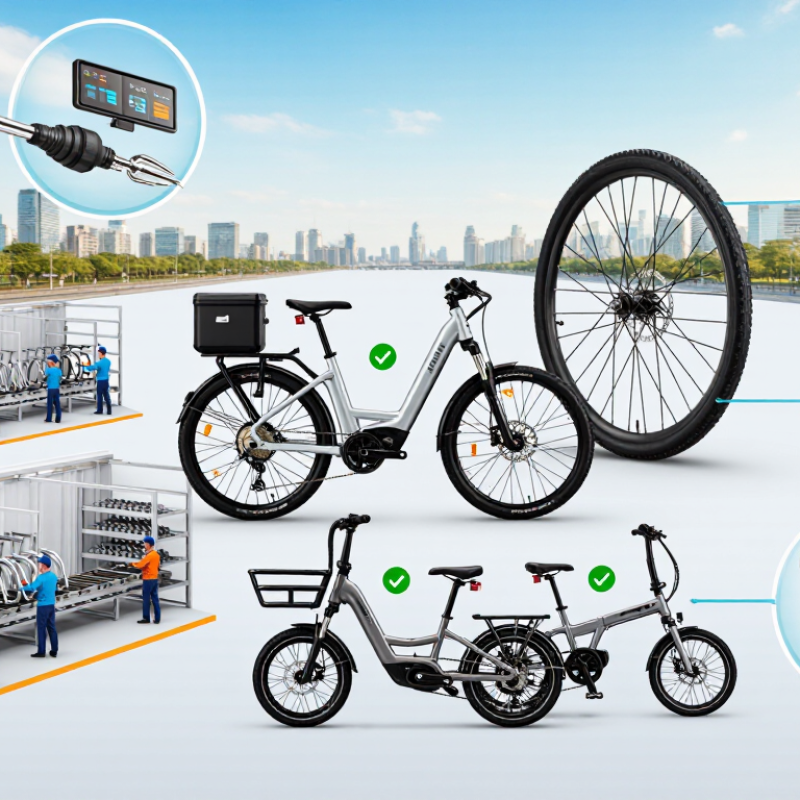
China’s urban ebike manufacturing sector is organized around distinct product needs. Commuter-focused factories prioritize lightweight frames, removable batteries, and comfortable upright geometry. Their models suit short city trips, office commutes, and crowded bicycle lanes. Practical details matter. A reliable rear rack can be more useful than extra motor power.
Folding-ebike manufacturers concentrate on compact hinges, smaller wheels, and easy storage. These products target apartment residents and multimodal commuters using trains or buses. Cargo-focused producers build stronger frames, extended rear platforms, and reinforced braking systems. Their designs support groceries, work equipment, or child seats, but payload claims require careful verification.
Some manufacturers specialize in connected urban ebikes. They integrate displays, GPS functions, app controls, and battery monitoring. These features can improve fleet management and maintenance records. However, more electronics may increase repair complexity. Specifications can mislead.
A credible supplier should provide battery test reports, frame fatigue data, charger documentation, and clear warranty terms. Compliance with the destination market’s safety requirements also deserves close review. Factory audits, sample testing, and spare-parts access help reveal operational reliability. Product focus is important, but after-sales support often decides whether an ebike remains useful after its first rainy season.
China’s urban ebike manufacturers support global markets through a dense, specialized supply chain. Frame factories, motor suppliers, battery assemblers, and software teams often operate within nearby industrial clusters. This proximity shortens development cycles and simplifies replacement-part sourcing. A commuter model may move from drawing board to pilot production within months. That speed is useful, but it can encourage rushed decisions.
Experienced buyers usually assess more than factory capacity. They review battery-cell traceability, brake performance, waterproofing tests, and quality-control records. Reliable manufacturers should provide documented inspections for welding, wiring, charging systems, and final assembly. Export teams also need to understand local safety rules, labeling requirements, recycling obligations, and transport restrictions. Compliance is not a box to tick once. Requirements change. Supplier communication can also be uneven, especially when technical terms are translated poorly.
Tips: Request a small pilot order before scaling. Test bikes on rough streets, wet roads, and crowded delivery routes. Check real battery range instead of trusting laboratory figures. Ask for spare-part lead times and repair manuals. Keep written approval samples. This prevents quiet specification changes. Factory visits can reveal practical details, such as organized component storage or careless cable routing. Photos help, but they cannot replace independent testing. Even strong suppliers may have weak after-sales systems, and that risk deserves honest attention.
What Are the Top China Urban Ebike Manufacturers?
Choosing a China urban ebike manufacturer depends on the city, not only the factory price. A flat coastal city may need a lightweight frame, simple gearing, and strong corrosion protection. A hilly city requires higher torque, dependable brakes, and a battery that handles longer climbs. For crowded streets, compact dimensions and bright integrated lighting matter more than maximum speed.
A serious manufacturer should explain its motor testing, battery safety controls, and frame inspection process. Ask for production samples, not only polished catalog images. Test an ebike on rough pavement, tight corners, and sudden stops. Check weld consistency, cable routing, display visibility, and charging time. Local certification requirements must also be confirmed before large orders. A factory with clear records and responsive engineers is usually more reliable than one offering the lowest quotation.
After-sales support can decide whether a fleet succeeds. Request spare-part availability, repair manuals, diagnostic tools, and a defined warranty process. The manufacturer should adapt saddle height, rack design, tires, and software settings for different riders. One weakness is often overlooked: a strong prototype may not match mass production. I would order a small trial batch and inspect it after several weeks of daily use. Rain, delivery loads, and careless parking reveal problems that showroom tests miss. The best partner listens to these failures and improves the next batch.
| Urban Use Case | Recommended Product Specification | Manufacturer Capability to Check | Relevant Compliance or Test Evidence | Typical Sourcing Target | Why It Fits the City Need |
|---|---|---|---|---|---|
| Flat, high-density commuting | 250 W nominal motor; 36 V battery; approximately 360–500 Wh; integrated lights; full mudguards; step-through frame | Consistent frame welding, reliable battery assembly, hydraulic or mechanical disc-brake integration, and stable production of commuter configurations | EN 15194 for European markets; UL 2849 and UL 2272-related battery-system evidence for applicable North American requirements; battery UN 38.3 transport documentation | Low-to-medium customization; pilot order before volume production; documented battery cell and BMS specification | Moderate power, easy mounting, and weather protection support daily short- to medium-distance travel with lower operating complexity |
| Hilly or bridge-heavy city | 250–500 W nominal motor, subject to local law; torque sensor; 36–48 V system; 400–625 Wh battery; hydraulic disc brakes | Motor thermal testing, torque-sensor calibration, battery protection under high load, brake performance verification, and hill-start testing | Brake and lighting test reports; battery safety testing; clear documentation of nominal power and assisted-speed limits for the target market | A sample route test on representative gradients; traceable motor and battery serial numbers; replaceable brake pads and drivetrain parts | Higher torque and controlled assistance improve hill climbing while stronger brakes help manage descents and heavier loads |
| Rainy, coastal, or humid city | Sealed electrical connectors; covered charging port; corrosion-resistant fasteners; full fenders; IP-rated component documentation | Water-ingress controls, salt-spray or corrosion testing, connector quality inspection, drainage design, and coating consistency | Ingress-protection test reports for specific components; coating or salt-spray records; electrical safety and battery transport documents | Written limits stating that the bicycle is water-resistant rather than submersible; spare connector, display, and controller availability | Moisture control reduces corrosion and electrical faults, while fenders improve rider comfort and component durability |
| Long-distance metropolitan commuting | 400–625 Wh battery; efficient 250 W motor where required; adjustable contact points; puncture-resistant tires; rear rack compatibility | Battery capacity verification, range testing under defined conditions, ergonomic fitting options, and supply continuity for wear parts | Capacity test records in Wh; charger safety documentation; cycle-life data with test conditions clearly stated | Published range methodology, removable battery option, charger availability, and a multi-year spare-parts plan | More usable energy, efficient assistance, and serviceable contact points make the bicycle better suited to repeated daily mileage |
| Shared mobility or rental fleet | Reinforced frame; tamper-resistant fasteners; modular battery; GPS or fleet-device mounting provision; high-visibility lighting | Fleet durability testing, batch traceability, repair manuals, component interchangeability, and documented quality-control procedures | Structural fatigue results; brake, lighting, and electrical safety reports; battery transport and recycling documentation | Pilot fleet, defined acceptance criteria, service-level agreement, spare-parts stock, and serial-number tracking | Serviceability and traceability generally matter more than premium styling when many bicycles are used continuously |
| Delivery and light urban cargo | Load-rated rear rack or cargo platform; torque-focused assistance; hydraulic disc brakes; reinforced kickstand; 500–750 Wh battery where legally permitted | Verified payload rating, rack-to-frame load testing, brake testing with cargo, kickstand stability, and drivetrain durability testing | Structural and braking test results for the declared load; battery and charger safety documentation; market-specific speed and power compliance | Clear separation of rider weight, cargo weight, and total permissible mass; replaceable wheels, tires, brakes, and drivetrain parts | A stable load platform and stronger braking improve safety and productivity during frequent stop-and-go operation |
| Compact apartments and multimodal travel | Folding or compact frame; removable battery; transport-friendly dimensions; approximately 250 W motor; integrated carry points | Reliable hinge design, folding-cycle testing, cable protection, battery removal safety, and accurate folded-size measurements | Frame fatigue and hinge testing; battery safety documents; declared dimensions and mass verified against production samples | Pre-production folding test, secure locking mechanism, accessible replacement hinges or latches, and packaging protection | A compact footprint and removable battery simplify storage, rail travel, apartment charging, and elevator access |
Note: The specifications above are practical industry reference ranges rather than claims about any particular manufacturer. Motor power, assisted speed, lighting, battery transport, and certification requirements must be verified against the laws of the destination market.