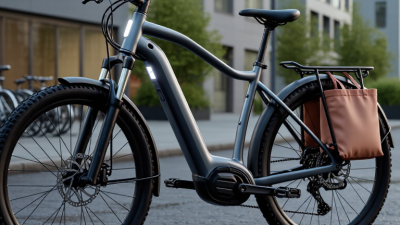
Choosing the right Urban Ebike manufacturer in China requires more than comparing factory prices. Global buyers must examine engineering quality, production consistency, documentation, and after-sales support. A polished website proves little. Real evidence matters.
This guide explores manufacturers serving city commuters, rental fleets, and private-label brands. It considers frame design, motor performance, battery safety, controller integration, and weather protection. It also reviews practical details, including minimum order quantities, sample policies, lead times, packaging, and spare-parts availability. A reliable supplier should explain testing procedures clearly and provide traceable technical documents. Independent inspections can reveal welding marks, uneven paint, loose connectors, or weak carton protection before shipment.
Small details matter.
Experience shows that factory visits and sample testing often change initial opinions. A supplier may offer an attractive quotation but struggle with firmware updates or warranty communication. Another may charge more while delivering better quality control and faster technical responses. No manufacturer is perfect. Buyers should still question unclear specifications, changing promises, and vague compliance statements. Some conclusions may require further verification because capabilities can vary between production lines and seasons.
The following overview compares leading Chinese Urban Ebike manufacturers through a global purchasing lens. It focuses on evidence rather than promotional claims. Readers will find guidance for evaluating factory experience, customization capacity, export readiness, and long-term cooperation. The goal is not to identify one universal winner. It is to help buyers choose a dependable manufacturing partner for their market, budget, and service expectations. With careful sampling and written agreements, a promising supplier can become a stable business relationship.
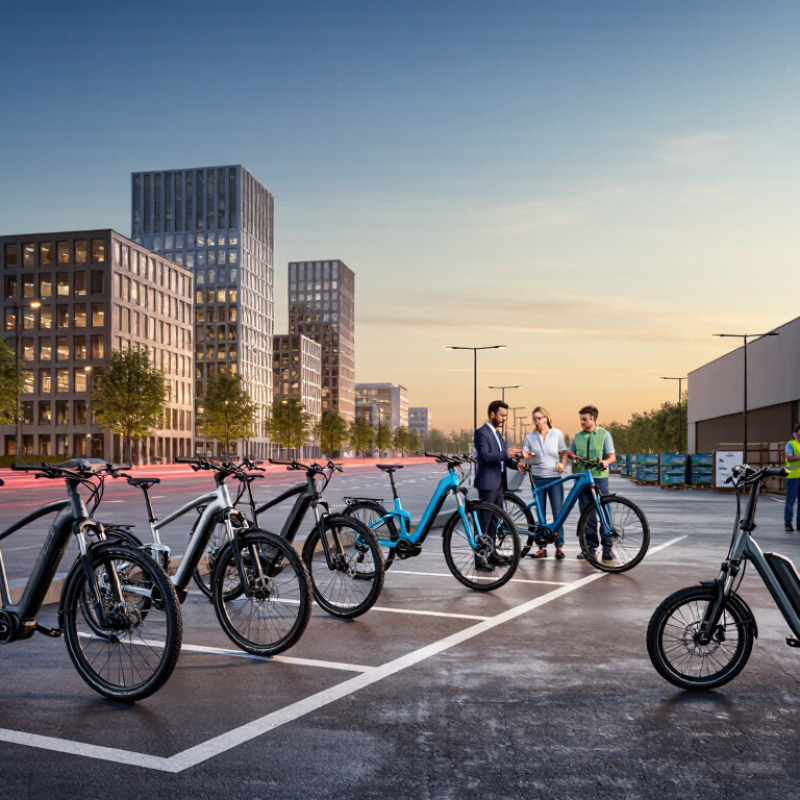
A leading Chinese urban e-bike manufacturer understands daily city travel, not only factory production. Its engineers study stop-and-go traffic, narrow lanes, steep ramps, and frequent rain. They select motors for smooth acceleration rather than impressive peak figures. Comfortable geometry, reliable brakes, bright lighting, and practical racks matter more than decoration.
Production discipline reveals real expertise. A capable manufacturer tests frames for fatigue and checks weld consistency under controlled procedures. Battery packs need traceable cells, protected enclosures, and clear charging guidance. Each finished bicycle should receive inspection for wiring, torque, braking, and water resistance. Independent laboratory testing and compliance with the buyer’s regional requirements add valuable confidence. Ask for test records, quality plans, and service response times.
Communication also defines leadership. Experienced teams provide accurate drawings, spare-parts support, and firmware information without hiding limitations. They can explain expected range under rider weight, temperature, hills, and tire pressure. That honesty is important because advertised range often looks better than street performance. No factory gets everything right. A thoughtful supplier admits weak points and records corrective action. Buyers should visit production lines when possible, inspect sample units, and test several bicycles before committing. A polished sample is not enough. Real reliability appears after repeated braking, charging, carrying, and riding on uneven urban roads.
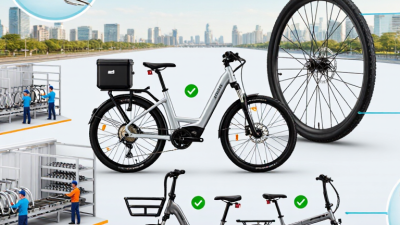
Evaluating an urban e-bike manufacturer requires more than checking catalog prices. CONEBI’s 2024 market report estimates that Europe sold about 5.1 million e-bikes in 2023. That volume raises expectations for durability, service, and regulatory documentation. Ask for production records, not polished showroom photographs. Verify welding consistency, frame-load testing, battery traceability, and final inspection procedures. A clean factory tour can mislead.
Battery safety deserves strict attention. Request test evidence aligned with UN 38.3 transport requirements and the regulations of each target market. For European sales, confirm conformity with EN 15194 and applicable battery rules. The IEA’s Global EV Outlook 2024 identifies electric two- and three-wheelers as the largest electric road-transport segment by sales. Urban models therefore need dependable thermal management, water resistance, and realistic range data. Range claims should state rider weight, temperature, terrain, and assist mode.
Supplier capability also appears after delivery. Examine spare-parts coverage, warranty response times, software support, and technician training. Ask whether replacement batteries remain available for several years. Small details matter: sealed connectors, readable torque markings, and a charger with clear safety labeling. Factory capacity is not the same as quality. My own evaluation checklist can still overvalue certificates and undervalue field feedback. Pilot orders expose weaknesses faster. Track failures from ten sample bikes, even when the sample feels too small. That discomfort is useful.
| Evaluation Dimension | Recommended Global-Market Benchmark | What Buyers Should Verify | Importance | Relevant Standard or Reference |
|---|---|---|---|---|
| Product Compliance | The complete bicycle configuration should meet the legal requirements of the destination market, including motor output, maximum assisted speed, lighting, reflectors, braking and labeling. | Request current test reports and declarations for the exact model, motor, battery and charger combination. Confirm that the documents identify the factory, model number and test scope. | Critical | EU: EN 15194 and applicable machinery and battery requirements. United States: applicable federal, state and local e-bike rules. |
| Battery Safety | Use certified lithium-ion battery packs with protected cells, a battery-management system, thermal protection and traceable production lots. | Check UN 38.3 transport-test evidence, safety test reports, cell supplier information, protection settings, pack drawings and production-batch traceability. | Critical | UN Manual of Tests and Criteria, Part III, subsection 38.3. Additional market requirements may apply to the battery and charger. |
| Charger and Electrical System | The charger should be matched to the battery chemistry and rated voltage, with over-voltage, over-current, short-circuit and over-temperature protection. | Verify charger input and output ratings, plug type, certification marks, electromagnetic-compatibility documents and compatibility with the final battery pack. | Critical | UL 2849 is widely used for electrical-system safety evaluation in North America; local requirements should also be confirmed. |
| Motor and Drive System | The motor, controller and display should provide consistent assistance, smooth start-up, suitable torque for urban gradients and a clearly documented power and speed configuration. | Review rated power, peak torque, assistance-speed limit, controller settings, cadence or torque-sensor type, firmware controls and replacement-part availability. | Critical | The permitted motor rating and assisted-speed limit vary by market; specifications must be configured for the destination country. |
| Frame and Fork Durability | The frame, fork, stem, handlebar and seat-post system should be tested for fatigue, impact, braking and load conditions appropriate for daily urban use. | Ask for structural test methods, load limits, fatigue-test records, weld-quality controls, corrosion protection and the approved rider-plus-luggage weight limit. | Critical | EN 15194 incorporates bicycle safety requirements; ISO 4210 is a key reference for bicycle design and test methods. |
| Water and Corrosion Protection | Electrical connectors should be sealed and routed to reduce water ingress, while the frame and fasteners should use corrosion-resistant finishes for wet urban environments. | Confirm the tested ingress-protection rating of relevant electrical components, connector sealing method, drainage design and salt-spray or corrosion-control process. | High | IEC 60529 defines IP-code testing. An IP rating should be linked to a specific component and test condition rather than the bicycle as a whole. |
| Braking and Safety Equipment | Hydraulic or mechanical disc brakes should provide stable stopping performance under the intended gross vehicle weight and wheel configuration. | Check rotor size, brake-system supplier, pad availability, cutoff behavior, lighting output, reflectors, bell or horn and conformity with destination-market requirements. | Critical | EN 15194 and ISO 4210 provide relevant bicycle safety references; road-equipment rules differ by jurisdiction. |
| Quality-Control System | A capable factory should use incoming-material inspection, in-process checks, end-of-line testing and documented corrective-action procedures. | Request quality manuals, inspection records, sample test results, serial-number rules, final inspection checklists and details of rejected-unit handling. | Critical | ISO 9001 certification can support process evaluation, but it should be checked for scope, validity and the actual manufacturing site. |
| Customization and Engineering | The manufacturer should be able to adapt frame geometry, battery capacity, motor settings, displays, racks, fenders, lighting and packaging without compromising compliance. | Evaluate engineering drawings, prototype procedures, sample-approval controls, firmware version management, change-notification rules and tooling ownership. | High | The final customized configuration must be covered by the applicable safety and compliance evidence. |
| Spare Parts and Serviceability | Common wear parts and electrical components should remain available throughout the planned sales and warranty period. | Obtain a parts list covering batteries, chargers, displays, controllers, sensors, brake pads, tires, wheels, cables and proprietary connectors. Confirm lead times and minimum order quantities. | Critical | A documented service-parts policy and repair manual are stronger evidence than a general promise of after-sales support. |
| Warranty and Claim Handling | Warranty terms should distinguish the frame, electrical components, battery and consumable parts, with clear exclusions and a defined claim process. | Review warranty duration, battery-capacity conditions, response times, evidence requirements, replacement policy, labor coverage and responsibility for freight or inspection costs. | Critical | Warranty obligations depend on the sales contract and destination-market consumer or commercial law. |
| Production Capacity and Delivery | The factory should demonstrate stable production planning, realistic lead times, capacity for repeat orders and controls for seasonal demand. | Check production-line capability, monthly capacity by model, component lead times, order history, sample-to-mass-production schedule and shipment-performance records. | High | Capacity figures should be supported by production records and should distinguish total factory capacity from capacity available for the buyer's model. |
| Packaging and Logistics | Packaging should protect the bicycle during sea, air or road transport and comply with battery-shipping documentation requirements. | Inspect packaging drop-test results, carton dimensions, palletization, moisture protection, dangerous-goods procedures, shipping marks and damage-claim records. | Critical | Lithium-ion battery shipments are subject to transport rules, including applicable International Air Transport Association and International Maritime Dangerous Goods requirements. |
| Commercial Transparency | Quotations should clearly separate bicycle specifications, tooling, certification, packaging, freight, taxes, payment terms and after-sales obligations. | Compare like-for-like specifications and request a signed technical data sheet. Confirm whether quoted prices include the battery, charger, accessories, testing and required documentation. | High | A complete landed-cost analysis should include product cost, logistics, duties, local compliance, warranty reserves and service-parts inventory. |
Use this matrix to compare shortlisted manufacturers consistently. Certification and test evidence should always be verified for the exact product configuration and destination market.
China’s urban e-bike manufacturing base serves several global buyer needs. High-volume OEM factories focus on affordable commuter models, steady output, and flexible private-label production. Integrated suppliers often combine frames, motors, batteries, displays, and app systems in one facility. This can shorten development cycles and reduce coordination risks. It can also limit component choice. That trade-off matters.
The International Energy Agency’s Global EV Outlook 2024 reports that electric two- and three-wheelers represent more than half of global electric vehicle sales. China remains the largest market and production center for this segment. These conditions support strong local expertise in compact motors, removable batteries, and city-focused frame geometry. Many Chinese manufacturers now offer step-through frames, hydraulic disc brakes, integrated lights, and torque sensors for daily commuting. Their urban strengths are practical. Think narrow lanes, apartment storage, and frequent stop-and-go riding.
The strongest suppliers usually provide battery test records, cell traceability, water-resistance checks, and production inspection data. TÜV Rheinland’s battery safety guidance also stresses thermal, mechanical, and electrical testing across the battery lifecycle. Buyers should request evidence, not promises. Some factories still overstate range figures under ideal laboratory conditions. Real traffic is different. A 500 Wh battery may perform very differently with hills, cold weather, heavy loads, and low tire pressure. Supplier audits, sample testing, and after-sales planning remain essential, even when the quoted factory price looks attractive.
Key Chinese manufacturer strengths for urban e-bike sourcing, measured by buyer priority rather than company or brand performance.
How to read the chart: For global buyers, customization, supply-chain access, battery integration, and export compliance are among the most important factors when comparing Chinese urban e-bike manufacturing partners. The index is a buyer-oriented benchmark and does not rank individual companies or brands.
For global buyers, the best China urban ebike manufacturers show control beyond attractive prototypes. Their factories should document weld inspections, battery matching, brake testing, and end-of-line performance checks. A reliable supplier can provide serial-number traceability from cells to finished bicycles. The paperwork matters. The IEA’s Global EV Outlook 2024 reports that nearly 25 million electric two- and three-wheelers were sold worldwide in 2023. This scale increases the need for repeatable production, not only low pricing.
Certification must match the destination market and vehicle design. For European sales, buyers should request evidence related to EN 15194, CE obligations, EMC, and RoHS requirements. Battery packs also need transport documentation, including UN 38.3 testing. For North American projects, relevant electrical and battery safety evaluations may include UL 2849 and UL 2271, depending on configuration. Certificates alone are insufficient. Check the issuing laboratory, test scope, product model, and report dates.
Export readiness appears in small details. A capable manufacturer prepares multilingual manuals, compliant labels, spare-part lists, carton drop-test records, and customs data. Ask for charger plug specifications and battery shipping procedures early. One overlooked connector can delay a container. Factory claims still need verification through pre-shipment inspection and sample retesting. No factory is perfect. Production changes, substitute cells, or rushed software updates can weaken compliance after approval. Buyers should audit change-control records and keep signed specifications for every purchase order.
Best China Urban Ebike Manufacturers for Global Buyers
How Global Buyers Can Select the Right Manufacturing Partner
Selecting an urban ebike manufacturer requires more than comparing prices. Visit the production site when possible. Observe welding stations, paint booths, battery assembly, and final inspections. Ask how defects are recorded and corrected. A reliable partner should provide clear specifications, sample approval, production timelines, and traceable quality records. Request test reports relevant to your target market. Battery protection, charger compatibility, braking performance, and lighting require careful verification.
Tips: Start with one representative sample. Test it on slopes, rough roads, wet streets, and repeated stop-and-go routes. Check frame alignment, cable routing, motor noise, display accuracy, and charging temperature. Ask for the supplier’s minimum order quantity and spare-parts plan. Confirm who handles warranty claims and how quickly replacement components can ship. Written answers matter.
Do not choose a factory only because its showroom looks impressive. A polished tour proves little by itself. In practical sourcing, small details often reveal more, such as labeled bins, clean inspection benches, and consistent torque tools. I have learned that fast replies can hide weak engineering support. Some manufacturers also promise customization before checking tooling costs. Ask for a realistic development schedule, not an optimistic one. Review every change before mass production, because a minor connector or firmware issue can affect thousands of units.